DIY PoE Security Cameras vs ADT: Own Your Footage, Skip the Monthly Bill
If you've priced out professional home security lately, you already know the model: a closet full of someone else's hardware, a contract, and a recurring charge that never stops. ADT and the rest sell peace of mind, and they're genuinely good at one thing DIY can't replicate. But for tech-savvy DIYers, a Power-over-Ethernet camera system you run yourself wins on the things that matter to people who like to own their own data. Here's the honest comparison, plus the parts worth buying during Amazon Prime Day, June 20-24, 2026.
What "DIY PoE" actually means
A self-hosted PoE setup is three parts: PoE cameras that get power and data over a single Ethernet cable, a PoE switch to feed them, and an NVR (network video recorder) or self-hosted box that records everything to a local disk. No cloud account is required to watch your own front door. The footage lands on a drive in your house, and that's the whole point.
The honest scorecard
- No monthly fees. Buy the hardware once. ADT bills you essentially forever; a PoE system has zero recurring cost after install.
- You own and control the footage. Recordings sit on your own HDD. No third party holds your video, no subscription tier gates how many days you can scroll back, and nobody can hand your clips to anyone without going through you.
- Remote viewing on your terms. You don't need a vendor's app phoning home. Run your own VPN back to your network and view live or recorded video from anywhere, with nothing exposed to the public internet.
- The real trade-off: no professional monitoring or dispatch. This is where ADT earns its money. When an alarm trips at 3 a.m., a monitoring center sees it and can call the police or fire department even if you're asleep or out of the country. A DIY system records and notifies you; nobody is standing by to dispatch responders on your behalf. If 24/7 third-party response is a hard requirement, that's a legitimate reason to pay for monitoring, possibly alongside your own cameras.
For most of our readers, the calculus is simple: you want every frame stored locally, you're comfortable managing your own network, and you'd rather get a push notification and check the feed yourself than rent eyes from a monitoring center. That's the same own-your-stack ethos behind everything we build at Tuxxin, from self-hosted tooling in Tuxxin's projects to the network products at iNetPanel.
The hardware: what to actually buy
These picks cover a full self-hosted build, from cameras to the disks that hold the footage. All of them are worth watching for deals during Prime Day, June 20-24, 2026.

A clean PoE camera with strong low-light performance that integrates into a self-managed UniFi stack, so you keep recordings local instead of in a vendor cloud.
View on Amazon →
The fastest path to a turnkey local system: a 16-channel NVR, bundled cameras, and storage that records entirely on-premises with no subscription.
View on Amazon →
A 230W PoE++ budget across eight 2.5G ports means you can power several cameras and still have headroom for higher-draw PTZ or floodlight units.
View on Amazon →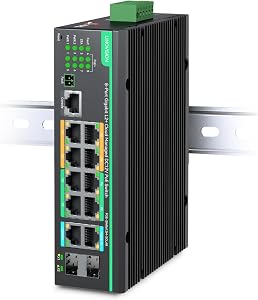
For larger installs: managed L2+ features, plenty of PoE ports, and redundant DC power input so the cameras stay up if one supply fails.
View on Amazon →
Surveillance-rated drives are built for 24/7 write-heavy recording; the AI tier handles many simultaneous camera streams, ideal for a busy NVR.
View on Amazon →
A more affordable surveillance disk for smaller systems; still tuned for continuous DVR/NVR workloads where a desktop drive would burn out.
View on Amazon →
Visible deterrence is the cheapest part of any system, and UV-printed outdoor signs hold up to weather.
View on Amazon →
Rust-free .040 aluminum signage that tells visitors the cameras are real before they get close.
View on Amazon →How it fits together
Run a Cat6 line from each camera to the PoE switch, uplink the switch to your NVR (or a small self-hosted box running something like Frigate or Blue Iris), and point recordings at the SkyHawk drive. Add your VPN for remote access and you have a complete surveillance system that costs nothing per month and answers to no one but you.
The trade-off is real and worth repeating: you're trading professional dispatch for total ownership. If you can live with being your own monitoring center, DIY PoE is the clear winner on cost, control, and privacy. Catch the components on sale during Prime Day, June 20-24, 2026, and build it once.